Defense Geospatial Information Agency "Division General Constantin Barozzi"
Ministry of National Defense


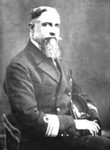
CONSTANTIN NICULESCU-RIZEA
Rear Admiral - 1928-1930 - Senior Director of the Army Geographic Service
CONSTANTIN NICULESCU-RIZEA was born on September 9, 1870, in the city of Brăila.
He began his military career on October 16, 1883, attending the courses of the School for Navy Children (1883-1885), followed by the Naval School in Livorno from September 9, 1885, to June 19, 1891.
He was promoted to the rank of second lieutenant on June 19, 1891, and assigned to the Depots and Crew Division.
After only two years, on August 30, 1893, he was promoted to the rank of lieutenant.
On April 1, 1896, he was transferred to the Sea Division and, a year later, on February 1, 1897, he was promoted to the rank of captain.
On June 1, 1897, he was assigned to the Fleet Crew Depots, and on October 16, 1898, he was reassigned to the Sea Division.
He was awarded the Bulgarian Order of "Saint Alexander," First Class, in 1898.
He had a very dynamic career, experiencing a tumultuous period in which he was frequently transferred between various structures and positions. Thus, on October 1, 1898, he was assigned to the River Ports Defense, on October 15, 1899, to the Navy Schools, on April 1, 1901, to the Crew Depot, and on October 16, 1901, to the Danube Division.
In 1901, he was awarded the "Crown of Romania" Order, Fourth Class, as a Knight.
He was appointed submarine commander on April 16, 1903, within the Danube Division, and in the same year, he received the Bulgarian "Military Merit" Order in the rank of officer.
On February 1, 1906, he was promoted to the rank of lieutenant commander and assigned to the Sea Division, and only a year later, on April 15, 1907, he was reassigned to the Danube Division.
He was appointed deputy director in the Central War Administration on April 1, 1909, then to the Sea Division a year later, and on April 1, 1911, after being promoted to the rank of commander-captain, he was assigned to the Military Navy Command.
In 1912, he was awarded the "Star of Romania" Order in the rank of knight, and in 1914, the "Crown of Romania" Order in the rank of officer.
On January 20, 1913, he was mobilized for the Balkan War and demobilized on August 31, 1913.
On April 1, 1916, he was promoted to the rank of commander, and in the same year, on August 15, he was mobilized again due to Romania's state of war.
On January 4, 1917, he was appointed director of the Navy Arsenal.
On February 9, 1917, he was appointed military commander of Covurlui County, a position he held until June 1, 1918, when he was reassigned as director of the Navy Arsenal.
During World War I, Commander Niculescu-Rizea also served as the commander of the Galați Military Garrison. On January 20, 1918, he received orders to defend the city of Galați, which was facing the retreat of Russian troops under the influence of the Bolshevik Revolution. Between January 20-22, 1918, with a small force of approximately 355 men, he engaged in fierce battles against two Russian divisions, covering himself in glory.
Ironically, for these actions, Commander-Captain Constantin Niculescu-Rizea, head of the Galați Garrison, was decorated by the Tsarist Army with the "St. Stanislaus" Order with swords in the rank of commander. In memory of these fierce battles, the residents of Galați erected a monument, which was destroyed after 1944, in another twist of fate, by Soviet troops.
He served as deputy commander of the Navy Command from December 25, 1918, to January 9, 1919, when he was again appointed director of the Navy Arsenal.
On June 8, 1920, he was appointed commander of the Danube Division, and after a brief period as deputy commander of the Navy Command, he returned to the Danube Division.
On October 1, 1920, he was appointed senior director within the Navy Directorate of the Ministry of War.
On April 1, 1921, he was promoted to the rank of rear admiral and appointed inspector commander and senior director at the Navy Inspectorate within the Ministry of War.
He was awarded the "Crown of Italy" Order in the rank of commander and the "Crown of Romania" Order in the rank of commander in 1922, as well as the "Star of Romania" Order in the rank of commander in 1927.
His memoir mentions, without specific dates, that he attended the Naval Academy and the Torpedo School in Italy. He published a series of naval manuals and was part of the commission that drafted the Military Navy regulations.
On October 1, 1928, he was appointed senior director of the Army Geographic Service, a position he held until April 1, 1930, when he was placed in reserve and appointed senior director of the General Inspectorate of the Navy.
He was promoted in reserve to the rank of rear admiral in 1930, vice admiral on January 1, 1932, and six years later, on January 1, 1938, he was retired.
The date of his death is unknown.